10/11/25 Moonshiner
I have a tendency to obsess about folk songs. Not folk music in general but specific songs: the lyrics, the origins, The historical context. The way it inevitably would evolve through the lips of Pete Seeger, Joan Baez, or the Chieftains, and the lessons it has to teach us today.
This is just as much an exercise in masturbation as in intellectualism. During six weeks travel in Israel in the summer of 2021, I chewed on Arthur McBride (still my favorite song), wandering wistfully through the Galilee as I spoke with the fig trees and thyme…bushes? about the horrors of draft systems and how people compartmentalize themselves into institutional standards. I spent this last summer learning just enough clawhammer to pluck out The Cuckoo to reflect my internal romantic woes. I remember my obsession with John Henry back when I was deemed an essential-enough worker during the pandemic to take customer service calls; listening to John Fahey while plunging my face into an ice bath of LSD once a month. I bitched to my friends about capitalism, listening to his albums like they were treasures we dug out of a pirate chest in the middle of the Sonoran Desert.

I am not the first to carry this habit, nor the most prolific. I am no collector of broadside ballads, with voluminous scrawlings of rhyme kept locked in my Oxford study, nor Smithsonian archivist magpieing through collected, staticy records in search of a great, true American canon. But I think it’s a hobby that used to be less anti-social.

To learn folk songs before we had recorded music, one was required to speak to what was called then a ‘folk singer’. This was not a Williamsburg hipster with a beanie and a pair of glasses he doesn’t need singing cloying Bob Dylan covers at a brewery after a long day of coding. This was just a person – in fact, it was probably someone you knew. Maybe it was your uncle, or grandmother. Or the town baker, or a preacher, or a slave. Sometimes all three. They sang from their memory – a song they had heard before, or hadn’t. Lyrics they simultaneously remembered and misremembered, a melody etched in their throat muscles. They sang from a crystalline and faulty past, and there was no perfection, as there was no time to be perfect. And there was no notation. No intellectual property, just guesses in the form of music. But it was all conversational. This form of musical-memory-vomit is what academics now call “oral transmission”. And it’s what folk music is built on.

And then came the songcatchers–travelling academics about a hundred years ago who rambled from town to town with recording equipment, picking up songs as they went along and nailing rural sounds to the walls of time by way of analogue record; what was once a form of oral tradition and communion became transformed into a genre, with the auditory museum of recordings from that time becoming its canon and bible. This would inevitably be followed by the Folk Revival of the 1950’s and 60’s, where a generation of bourgeois college students plied anxiously to learn the aesthetics, rhymes, and diction of yesteryears’ folk singers in the hopes of not oral transmission, but accurate performance. Folk Music, as we know it today, is not performed by musicians, but by actors and diviners, who seek to costume themselves in a bygone time in the hopes of revivifying it and becoming its vessels. And I’m one of them. Doing the best Mississippi John Hurt impression that YouTube can teach me.

And yet, even in the days of collection and revival, the practice was still shared. To learn folk songs, you needed records. To get records, you needed a record store, which needed people who worked there to tell you which records were worth shit. And that same store had like-minded anarcho-communists you could complain about proletarian struggles with before you go back to your dorm at Columbia. The Greenwich Folk Scene was notoriously communal, friendly, and warm. Folk music went from being sourced from communities to being a community itself.
I don’t own a record player. My obsessions with Arthur McBride and The Cuckoo were all mediated through Spotify, which, unless I want to use its bullshit driving settings, I do not need to speak to. I’ve never really had a folk music community…not to say they aren’t around. But the community isn’t mandatory.
Despite my griping about folk music’s streaming era, this isn’t to say there aren’t benefits. I can hear a song repeatedly across infinite playthroughs across infinite versions across infinite artists which speaks to every pedantic fiber in my neurodiverse brain. And on the artist’s level, they can reach a global audience cheaply and with no gatekeeper. Which brings me to The Moonshiner.

If you don’t know The Moonshiner, I’d highly recommend it–it’s a must-know for any folk enthusiast who’s dabbled in the depressive arts. It tells the story of an alcoholic who resents a job that he can’t leave–appropriately, the song is of both Irish and American origins. I always fall back on it when my life feels out of control, mostly because of a single, famous verse I return to for comfort:
Let me eat when I am hungry,
Let me drink when I’m dry,
A dollar when I’m hard up,
Religion when I die.
This verse and the lyrics it contains are not definitive; no folk lyrics are. The reason they’re so well-known is because the versions most people know of The Moonshiner, such as Uncle Tupelo’s recording from 1992 or Redbird’s from 2005 (both beautiful, in my opinion) contain them, which they in turn learned from Bob Dylan, who in turn likely adapted it from Rolf Cahn’s 1959 recording, likely also the origin of this version’s minor melody and 4/4 timing. But many versions, such as Roscoe Holcomb’s in 1962, only contain a version of the first two lines, while others such as Buell Kazee’s recording in 1927, don’t contain these lyrics at all. It should additionally be noted the similarity between this verse and a verse in Country Blues, recorded by Doc Boggs in 1928:
Give me cornbread when I'm hungry, good people
Corn whiskey when I'm dry
Pretty women are standing around me
And bring me heaven when I die
It also appears that most early recordings are not in the minor 4/4 of Dylan’s version, but in a slow, modal waltz, such as the aforementioned Holcomb’s and Kazee’s. I’ve loved this song for a long time, and I’ve known how to play it for years. But I’ve never heard a version without the prior verse until a year ago.

At that time, I decided at the age of twenty-six to finally make the jump from existential dread into youthful stupidity and move from my home in Tucson, AZ to Los Angeles. What followed was the furtive mix of chaos and loneliness that makes listening to The Moonshiner so satisfying – rental scams, heartbreak, job dissatisfaction, and loneliness led to me darting my eyes one morning between my phone screen and the traffic-filled highway, just focused enough not to veer off the 101 into the LA river as I obsessively queued Moonshiner covers on my Spotify.
My ears brushed ravenously through familiar lilting Irish brogues, replete with high-tenor banjo plucking, and the melancholy balladeering of the hipsters and punks who first taught me the song, when I suddenly found myself listening to a version of Moonshiner I’d never heard before. It was a slow waltz, like older versions I had listened to, but something felt different. The rhythm swung carelessly and drunkenly, reflecting the character of the titular moonshiner in the song. A woman sang of the moonshiner in a nasal and mournful pitch, but while the Dylan-esque minor version felt melancholy and emotive, this felt removed. Detached, isolated.
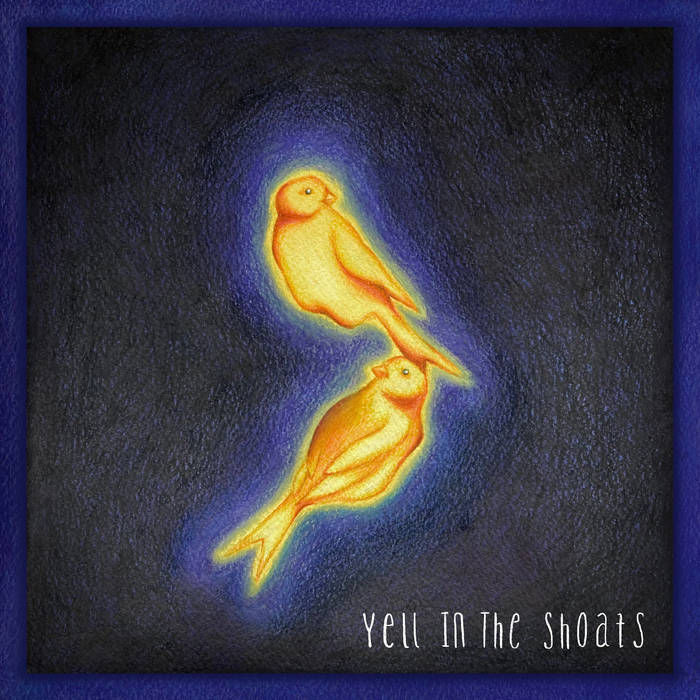
I had grown up around alcoholics, and I knew that the sadness that follows them hardly has the clarity the more famous version seems to evoke. Long-suffering people tend to carry their hardship quietly, in a tragic discretion that this version seemed to understand. I checked the name of the artist to find that the band, The Wild Shoats, had released their debut album, Yell in the Shoats, a few months prior. Despite how good it sounded in my ears, it only had a few thousand listens. It’s a really good album. You should look them up.
That recording clung onto me, and I listened to it a few dozen more times over the next couple weeks, in which time I discovered that my beloved verse, begging for the simple pleasures of food, drink, and God, was gone. There’s a deep thirst for autonomy in that verse…a plea for safety, spiritually and physically. A desire that the powers that tie the threads of reality show the simple mercy of choice to the speaker; that food arrive when wanted, and money only when needed. It’s a desire that ultimately might make someone move to Los Angeles. To etch themselves just enough of a name to earn them a simple peace, one which I promise you I still haven’t found.
The Wild Shoats didn’t include these lines, lines which, to me, defined the song. So, what, then, remains?
I’ve been a moonshiner for many long years,
I’ve spent all my money on whiskey and beer,
And my breath was as sweet as the dew on the vine,
God bless that moonshiner, I wish he was mine.
The first two lines are the same as in any version on either side of the Atlantic, but line 3, which usually is only a line in a single verse about women, acts as a sort of refrain here. And yet, in a sickening way, it makes sense. I remember the first time I met a drunk – my father picked up a drunk old man who’d fallen on the sidewalk, and still, whenever I think about it, the first thing I remember was how sweet his breath smelled.
The last line is confusing though…usually, the dew line in traditional versions of The Moonshiner is followed by “I wish they were mine”, as in women. But here, the moonshiner himself becomes an object of desire, despite the rest of the verse being from his perspective. If I were a seventh grade English teacher, I’d say this makes no sense, what with the drifting from the first to third person and whatnot. Not to mention that even in the third line there’s a strange perspective shift as we move from present tense into past. And, let me tell you, as someone who’s read both Save the Cat AND Hero with a Thousand Faces…this isn’t grammatically correct!! But, lemme tell you, they fuck it up even further in the next verse.
He ripped out his pockets and she sewed up the seams,
She fed that moonshiner on sweet milk and cream,
Till his breath was as sweet as the dew on the vine,
God bless that moonshiner, I wish he was mine.
None of this shit is even IN traditional versions. Did they write this verse? Did they write a verse in a folk song?! Who would do that? Besides almost every folk singer in human history. But you’re not supposed to anymore. Actor and diviner, remember? My brain is being assaulted at a frequency that only dogs and the Coen brothers can hear.
But alright, I’m already this deep into this nonsense, might as well finish. Okay, he ripped out his pockets. Sad. Angry. Wait, why? I mean, I have guesses. But I don’t know. They don’t tell me either, could be rage, could be poverty, but ultimately they leave it as a suggestion. But she fixes it. I guess we know who was pining for the moonshiner in the last verse. Why doesn’t he do it? He fucked it up. Well, he’s probably drunk and incapable.
And she has to feed him because he’s unable to take care of himself. She’s more of a mother than a lover, in that case. Lots of relationships end up that way. In a lot of ways, she’s like liquor to him…sweetening his breath and building a dependance.
Her parents wouldn’t want me to mention their doe,
So good morning corn whiskey, I’ll try you once more,
And my breath was as sweet as the dew on the vine,
God bless that moonshiner, I wish he was mine.
Wait…so it’s over? Just like that? The relationship’s done? And now the speaker can’t even talk about it. Why?
It’s not really important, ultimately. It’s over, and all that he’s left with is what he already had–liquor. See, no matter what she was, he IS a moonshiner. This time, when the refrain returns, it’s hard to tell what sweetness he remembers; the liquor or the cream. But still, there’s a pining for the moonshiner. He’s pining for himself?
I remember thinking that thought as I listened to it in a leaking apartment in Silverlake that I couldn’t afford, listening to old songs from times I wasn’t present for. Suddenly, the idea of pining for yourself didn’t seem so weird.
Well I’ll go up some holler and I’ll build me a still,
And I’ll sell you a gallon for a two dollar bill,
And my breath was as sweet as the dew on the vine,
God bless that moonshiner, I wish he was mine.
Ah, the holler. That feature of Appalachian geography I feel a deep nostalgia for despite never seeing one myself and learning what it was from Google. I really like the use of ‘two dollar bill’ – it's a denomination of currency that doesn’t exist anymore. The moonshiner’s isolating himself in the past. Another hobby of mine. Maybe the only one I have.

If I’m being honest, I don’t think the Wild Shoats are missing much by cutting the couplet about food and drink. I grew up in a middle class family in the wealthiest country in human history. I’ve never wanted for those. But I’ve wanted for love, and companionship.
The Wild Shoats’ version of “Moonshiner” shifts freely between time and person, tense and perspective. There’s something about it that feels abstract – as though by removing continuity and point of view from this character and this relationship, you’re left with a clearer sense of color, shape, and texture, and the significance they contain.
There’s something brilliant about that. The original recorders of this song, and the people who sung it before them, had no concept of literary elements. They wrote intuitively, and beautifully, but without conceiving of texts like Legos in the way that we’ve learned in a postmodern world. The Wild Shoats here feel less like performers and more like inheritors. They’re an Appalachian string band from Pennsylvania and West Virginia. This song is theirs, and rather than perform from a time that doesn’t exist, showing the song as a museum piece, they actually use it. Change it. Folk music is functional, and they make it function by infusing it with 20th century structuring and the plaintive screen-addled loneliness of the Isolation Age.
I remember being a nineteen-year-old freshman at the University of Arizona vying for an ethnomusicology degree because I thought I should have one. And I remember, in my first musicology class, a Gen-X professor with messy hair and a Ramones shirt proclaiming that folk music is dead. I’ve been thinking a lot lately about how hegemons like to declare the death of things, and how well-meaning liberals like to follow suit apologetically. I hear it when landowners make land acknowledgements to indigenous peoples that live down the street. I hear it when history teachers teach in APUSH how important labor organization used to be while themselves living from paycheck to paycheck. And I hear it in that professor's proclamation.

I talked before about historic folk singers with a saint-like reverence because that’s what I’ve been taught to do. That they were creative and we are not. But you have to imagine the reverence and respect they
must’ve constantly had to carry—they learned these songs from their families, their community. They must’ve wanted so badly to play them right. The desire that modern folk singers have to act and perform like something that came before them is nothing new. It is our job as performers and artists to bring the relevance and truth from the past into a present-day audience. And I commend the Wild Shoats for doing just that.
Their version of The Moonshiner is a song that begs for connection–between past and present, he and she, first-person and third. It is aware of the shameless dives people make into their own history and that of others, and the desire to relive and fix them. Looking at their website, I see a group of friends who found connection through folk music, something that, along with all my obsessions, I use to isolate myself. So maybe I’ve been doing it wrong. Maybe it’s time to stop curating and start communing.


Comments